
Multimodal perception
2D/3D vision and depth fusion across racks, trays, and dynamic scenes.
Products
AgentOS supplies the intelligence, AgentBot supplies the industrial body, and skill packages make tasks reusable. The three layers are designed together and deployed as one system.
01 · AgentOS
AgentOS is not a robot management console. It is the layer that turns sensor data into an understanding of the physical scene, converts production intent into constrained task plans, and drives industrial hardware through verified skills.
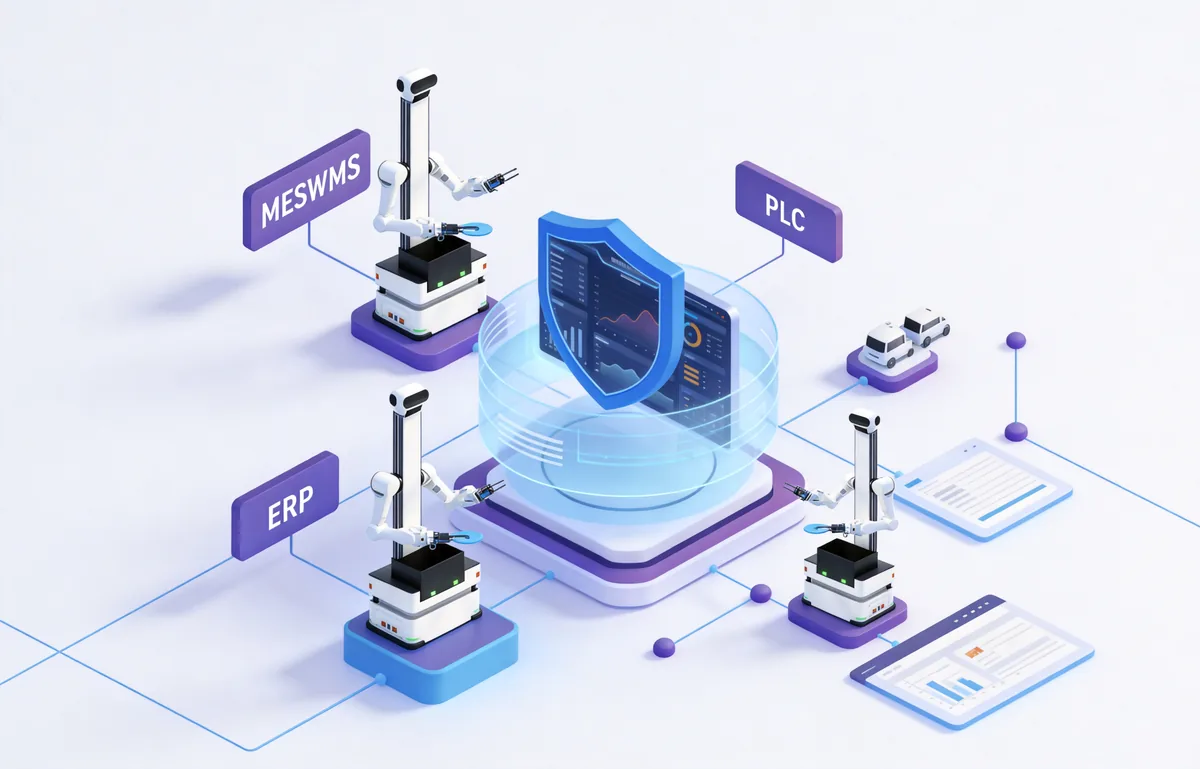
2D/3D vision and depth fusion across racks, trays, and dynamic scenes.
A live spatial model of containers, poses, occupancy, and traffic.
Hierarchical planning under process, permission, and safety constraints.
Versioned skills, parameters, and scene bindings per deployment.
Multi-robot task allocation, traffic rules, and handover sequencing.
Execution logs, exceptions, and success metrics feed skill iteration.
Deployment options include on-premises installation with data boundary and audit logging; cloud connectivity is optional and agreed per project.
02 · AgentBot
One intelligence layer, three physical configurations. Each platform is selected by scene — rack aisle, lift cabinet, or tote line — rather than by material type.
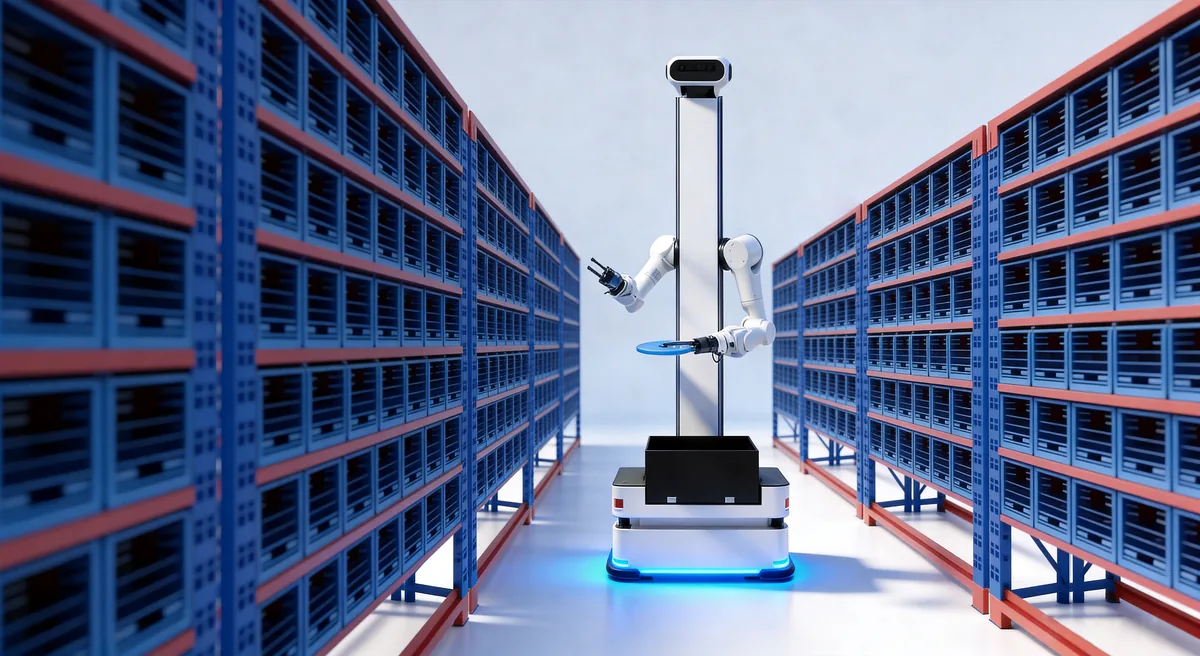
Material handling and storage operations for traditional high-bay rack environments. Retrofit into existing racking without fixed fixtures.
Product available
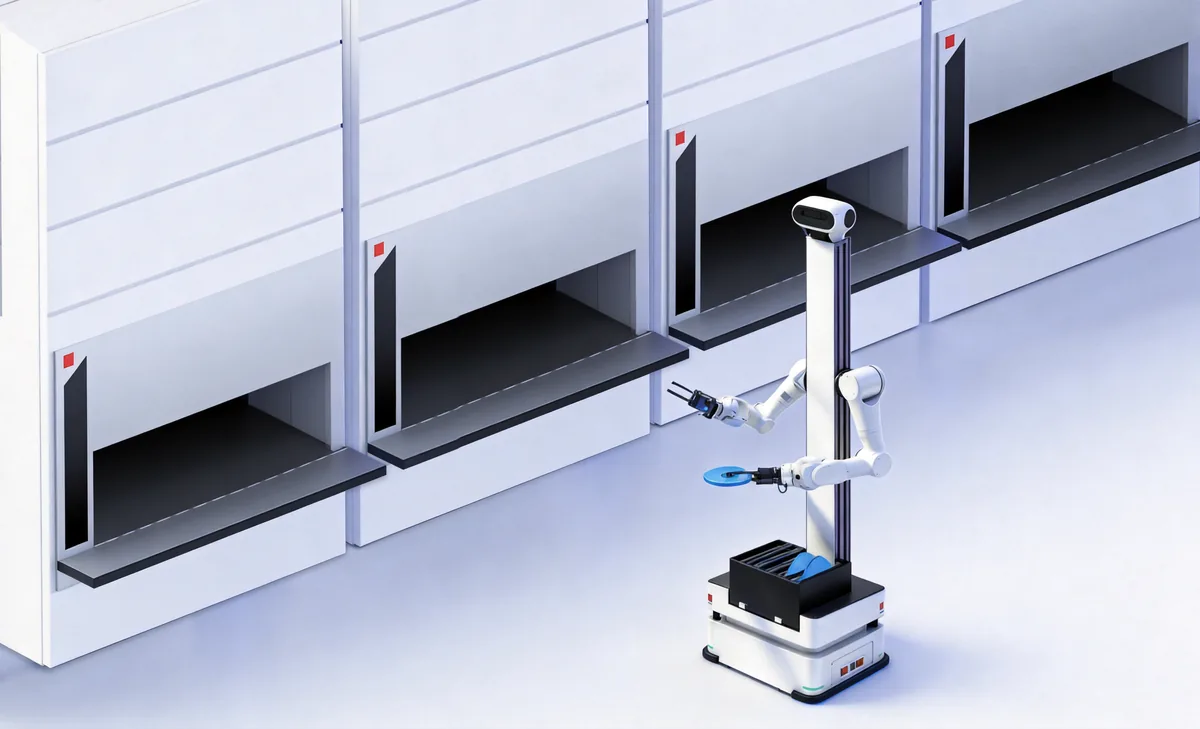
Flexible manipulation at vertical lift module (VLM) cabinets — perceiving and handling parts in dynamic, ever-changing trays.
Product available
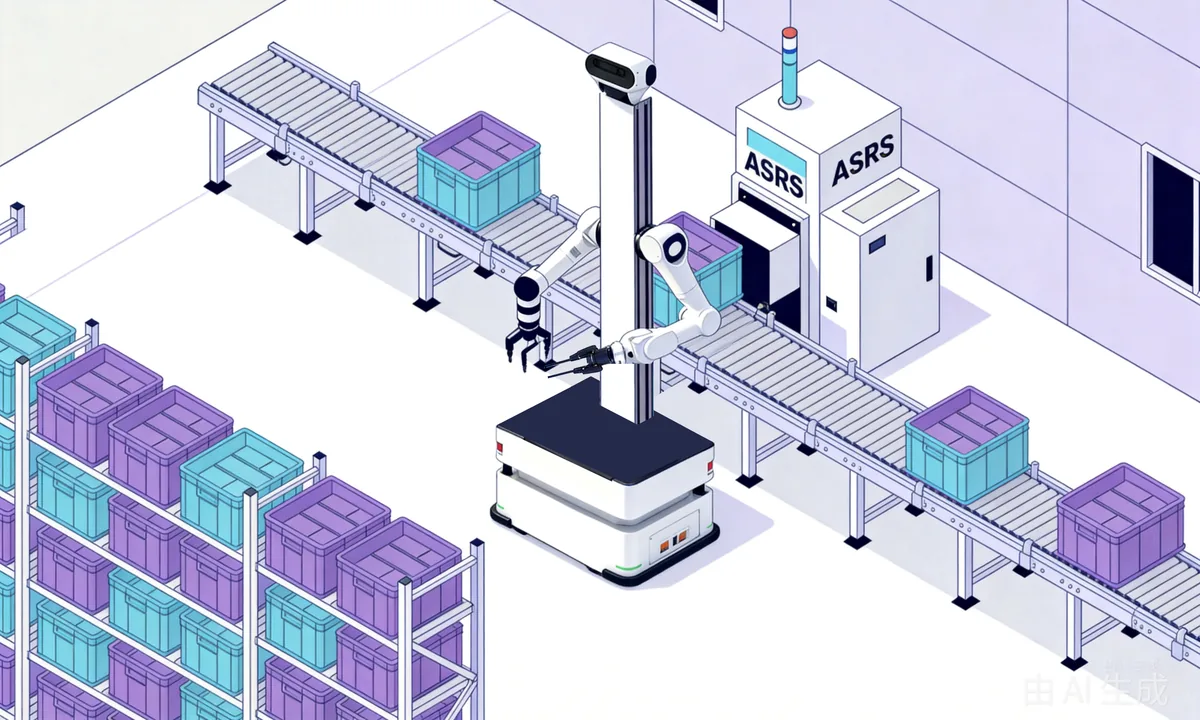
Warehouse operations for ASRS tote and bin scenarios — flexible picking and put-away across high-SKU automated lines.
Product available
| Field | AgentBot H | AgentBot A | AgentBot B |
|---|---|---|---|
| Positioning | High-bay rack aisle | VLM lift cabinet | ASRS tote line |
| Mechanical structure | Mobile base + dual-arm manipulation + onboard vision (common platform architecture) | ||
| Degrees of freedom / motion | To be supplied from the product datasheet | ||
| Payload | To be supplied from the product datasheet | ||
| Working height & reach | To be supplied from the product datasheet | ||
| Positioning & handling accuracy | To be supplied from the product datasheet | ||
| Vision & sensing | Multimodal 2D/3D perception with depth sensing; configuration per scene | ||
| Safety design | E-stop, safety zones, speed limiting, collision protection, manual override (see Enterprise) | ||
| Operation video | Available on request during technical evaluation | ||
Numeric specifications are intentionally left blank rather than estimated. Datasheet values will be added once confirmed by the product team.
03 · Industry Skills
Skills are parameterized, versioned, and bound to a scene. A new SKU changes parameters, not the program.
Detect, grasp, and place mixed containers into rack, cabinet, or tote positions.
Available
Assemble material sets per work order with item-level verification.
Available
Move totes and trays between storage, staging, and line-side points.
Available
Handle thin, nested, and mixed trays with pose-adaptive grasping.
Available
Route, queue, and hand over between stations and conveyor lines.
Available
Detect failed grasps, misplaced material, and blocked paths; escalate to operators.
Available
Skill availability reflects the current product scope. Validation evidence for each skill is provided per deployment in the project acceptance documentation.
A structured assessment of your material flow, containers, systems, and safety constraints — with a written scope, acceptance criteria, and clear go/no-go.