
Material complexity
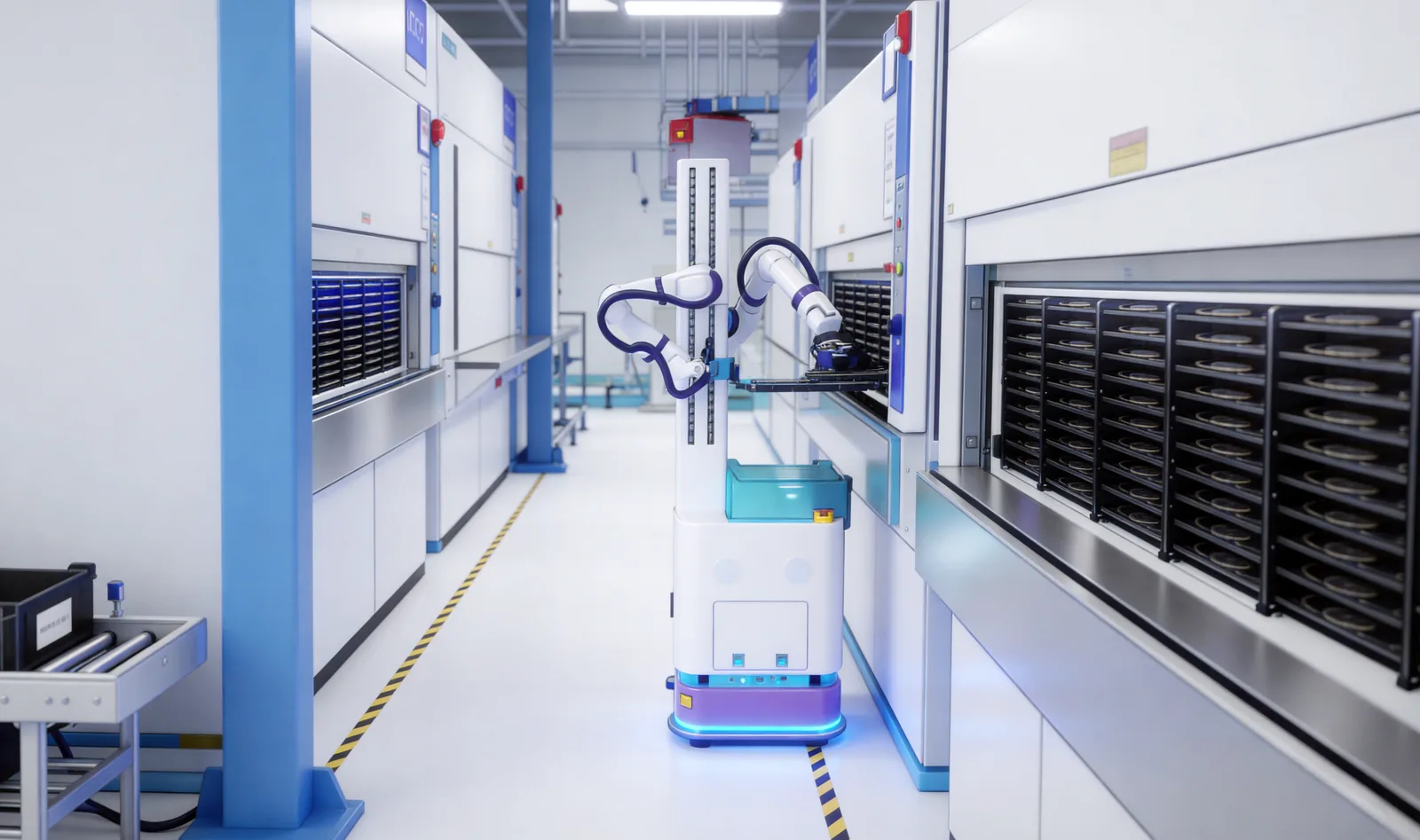
Thousands of material types across trays, reels, bags, and totes — every container format changes how a part can be picked.
SHANGQU.AI · Industrial Physical AI
Industrial Physical AI for Real-World Operations.
We build intelligent robots that perceive complex industrial environments, make decisions under operational and safety constraints, and execute real-world tasks with precision.
From Suzhou to the World.
Industrial challenges
In 3C electronics, semiconductor, and precision manufacturing, four structural realities keep the final material-handling step resistant to fixed automation.
Thousands of material types across trays, reels, bags, and totes — every container format changes how a part can be picked.
SKUs, storage locations, batches, and line sequences change continuously. Fixed programs require re-teaching at every changeover.
Repetitive receiving, picking, and line-side feeding are hard to staff and hard to keep consistent across shifts.
Wrong material, missed material, and unclear batch records create rework and audit exposure that manual handling cannot close.
Our approach
Rules describe a scenario. Physical AI reads the scenario in front of it, decides within industrial and safety constraints, and executes through industrial-grade motion control.
Multimodal perception and spatial understanding build a live model of the rack, tray, container, and surrounding traffic.
Task planning runs inside process, permission, and people-safety constraints — AI never commands safety-critical actuators directly.
Skills drive the robot through deterministic motion control, force-aware interaction, and continuous self-checking during the task.
Product ecosystem
AgentOS provides the intelligence, AgentBot provides the physical body, and industry skill packages make industrial tasks reusable across robots and sites.
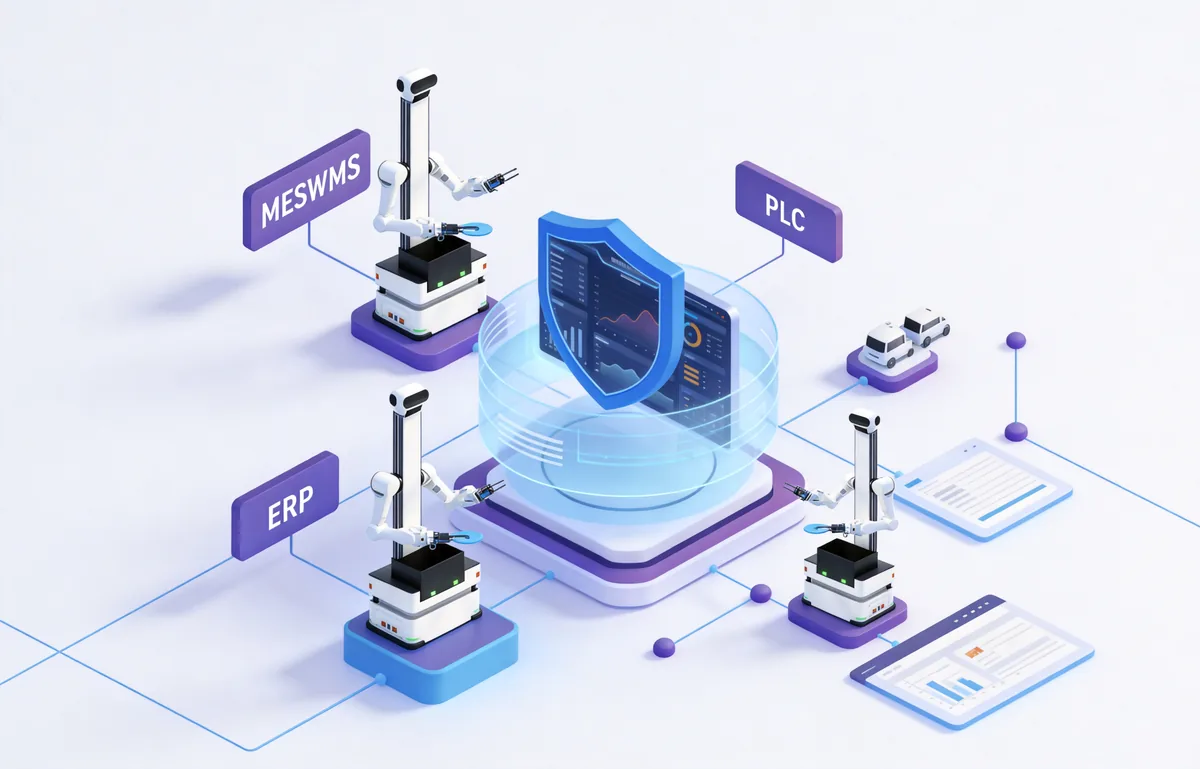
The intelligence platform for industrial embodied AI: perception, world understanding, constrained planning, skill management, fleet coordination, and evaluation.
Learn more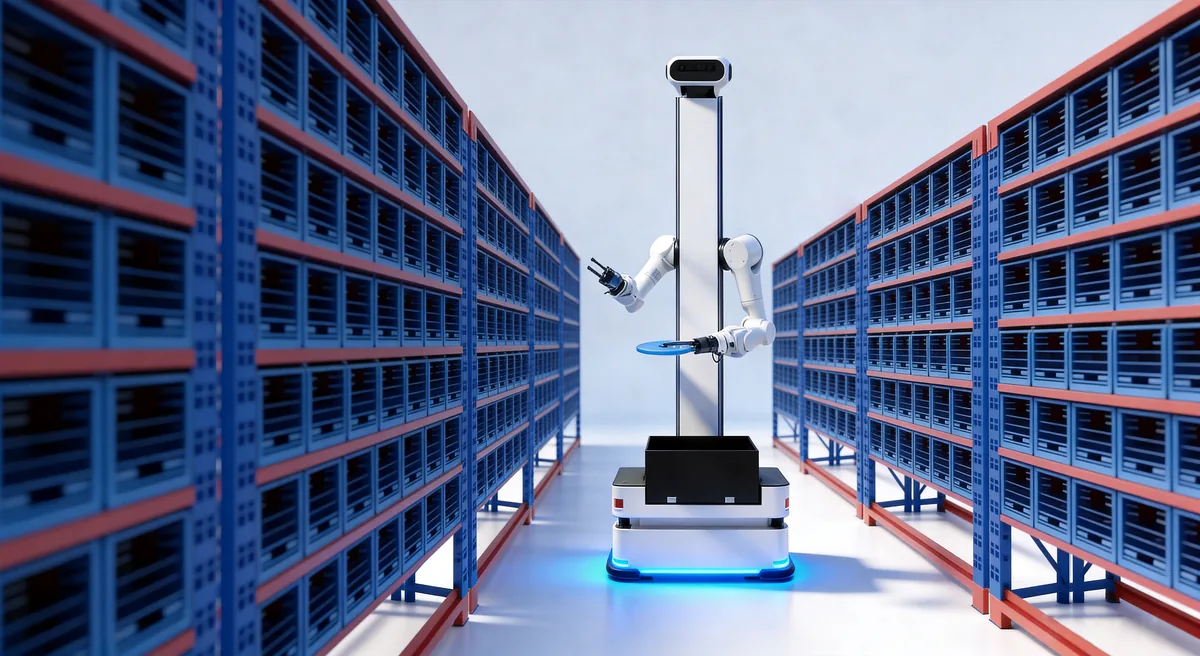
Industrial embodied robots built for rack aisles, vertical lift cabinets, and ASRS tote lines — configured per scene, not per SKU.
Learn more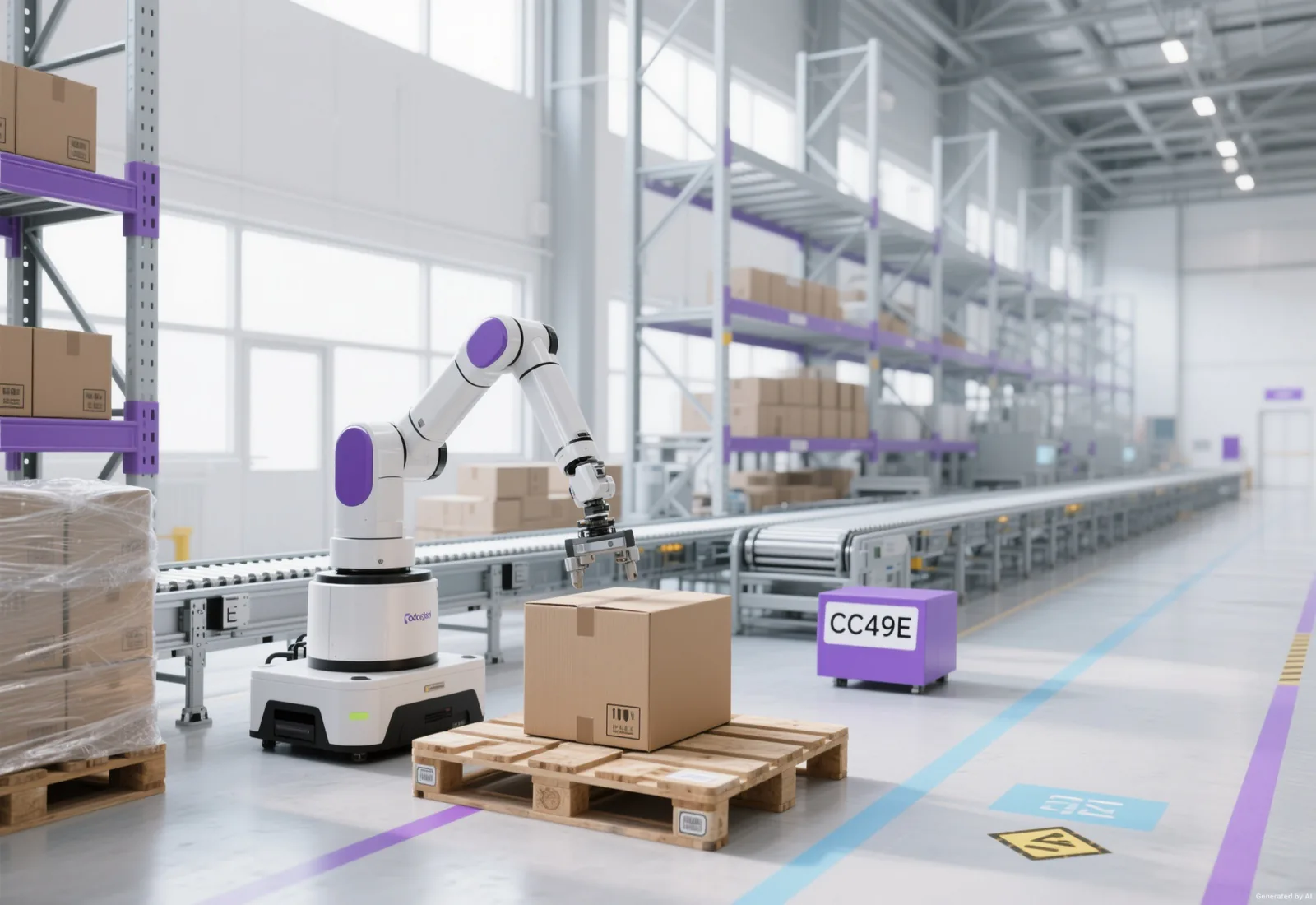
Reusable capabilities — picking and put-away, kitting, material transfer, tray handling, intralogistics, and exception handling.
Learn moreIndustrial applications
Deployed at the points where material enters, moves through, and leaves the plant.
Put-away and retrieval in existing high-bay racking and ASRS lines.
Unloading, sorting, and registering incoming material against WMS records.
Moving totes, trays, and bins between storage, staging, and production areas.
Feeding and returning material at the line in the sequence production requires.
Scenario scope depends on site layout, container standards, and system interfaces — confirmed during assessment.
Validation
Validated with Jabil, a Fortune Global 500 manufacturer, in continuous production operation — with measured runtime, SKU coverage, and safety records documented per project.
See validation & data definitionsEnterprise
System integration, functional safety, IT/OT governance, quality traceability, and lifecycle support — each documented with implementation scope and limitations.
See enterprise readinessMake AI the new productive force of the physical world.
A structured assessment of your material flow, containers, systems, and safety constraints — with a written scope, acceptance criteria, and clear go/no-go.